
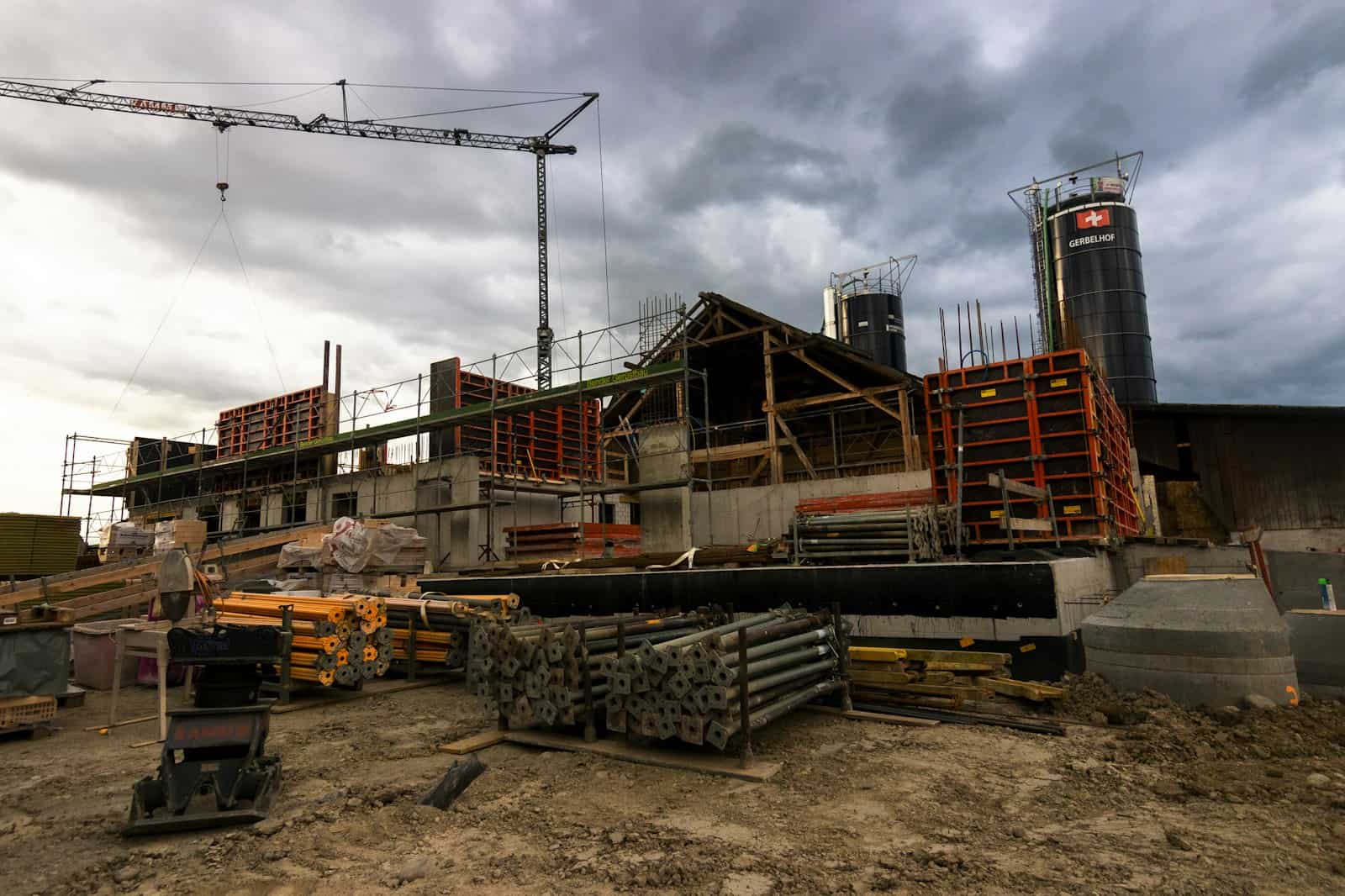
For contractors and owner-builders who construct and then occupy their own facilities, cost segregation construction planning can convert a single large building cost into several faster-depreciating asset classes. Instead of writing off an entire shop, yard building, or office over decades, a cost segregation study identifies the components that the tax code allows you to depreciate over much shorter periods. The result is larger deductions in the early years of ownership and improved cash flow at the exact stage when a growing construction company needs working capital most.
Quick answer: Cost segregation is an engineering-based analysis that reclassifies portions of a constructed or acquired building from long-life real property (depreciated over 27.5 or 39 years) into shorter-life categories of 5, 7, or 15 years. For contractors who build and own their facilities, this accelerates depreciation, front-loads deductions, and can pair with bonus depreciation to expense qualifying components immediately. It does not increase the total depreciation you take over the life of the asset; it changes the timing so more of the deduction lands in the early years.
What Cost Segregation Means for Construction Businesses
Cost segregation is the practice of separating the cost of a building into its underlying components and assigning each one to its proper tax recovery period. The IRS addresses this directly in its Cost Segregation Audit Techniques Guide, which it published to help examiners review studies and to outline what a quality study should contain. The central question the guide focuses on is whether an asset is correctly classified as Section 1245 property (generally tangible personal property with shorter recovery periods) or Section 1250 property (generally the building and its structural components).
When a contractor constructs a headquarters, an equipment shop, or a fabrication facility, the default tax treatment depreciates the whole structure over 39 years for nonresidential real property, or 27.5 years if the building is residential rental property. A cost segregation study reviews construction documents, blueprints, and actual costs to identify items that do not have to follow that long schedule. Those items move into 5-year, 7-year, or 15-year classes, where deductions are claimed far sooner.
Construction company owners are unusually well positioned to benefit. You already control the documentation that makes a study accurate: detailed job-cost records, subcontractor invoices, change orders, and as-built drawings. The Audit Techniques Guide stresses that the best studies rely on contemporaneous construction records and the input of people who understand both building processes and depreciation law. Builders have that material on hand, which lowers the cost and raises the reliability of the analysis.
It also helps to understand why the timing matters so much for a contractor specifically. Construction businesses tend to carry significant working-capital demands: payroll runs ahead of collections, equipment purchases compete with bonding requirements, and retainage can tie up cash for months. Pulling depreciation deductions into the early years of a facility’s life reduces taxable income precisely when those pressures are highest, freeing cash that can fund the next project rather than sitting locked inside a 39-year schedule.
Which Building Components Qualify for Faster Depreciation
The components that move into shorter recovery periods are those that are not part of the building’s basic structure or operation as a building. The IRS guidance and decades of case law draw the line around whether an item relates to the operation and maintenance of the building itself or instead serves a specific business function.
Items frequently reclassified to a 5-year or 7-year recovery period include the following:
- Dedicated electrical systems serving specific equipment, machinery, or specialized loads rather than general building power.
- Specialty plumbing that serves process equipment, wash bays, or production lines.
- Process piping, compressed air lines, and similar systems tied to operations.
- Decorative or non-structural finishes, certain flooring, and movable partitions.
- Data, security, and communications cabling associated with business operations.
Items frequently assigned to a 15-year recovery period as land improvements include the following:
- Site paving, parking lots, and the truck and equipment yards common at construction facilities.
- Site drainage, curbing, and retaining walls.
- Exterior lighting, fencing, and landscaping.
For a contractor, the yard, parking, and site work alone can represent a meaningful share of total project cost, and these land improvements often qualify for 15-year treatment. The remaining structural elements, such as the foundation, framing, roof, and standard building systems, stay in the 39-year or 27.5-year category. A study documents the cost and classification of each piece so the allocation can withstand review.
A note on the recent update to the IRS guide: the edition released in February 2025 added a dedicated chapter on the classification of electrical distribution systems, addressing when portions of those systems should be treated as shorter-life property versus 39-year property. Because electrical allocation is a common point of examiner scrutiny, this is an area where having a defensible, engineering-supported study matters.
The distinction often turns on function rather than appearance. Two identical-looking electrical runs can land in different recovery periods depending on what they serve: power feeding a welding bay or paint booth supports a business process, while power lighting a hallway operates the building. A study walks through each component with this functional test and ties the conclusion to the underlying records, which is what gives the classification its strength if an examiner asks questions later.
How Cost Segregation Pairs With Bonus Depreciation
The timing benefit of a study grows when shorter-life components also qualify for bonus depreciation under Section 168(k). Bonus depreciation applies to qualifying property with a recovery period of 20 years or less, which is exactly the 5-, 7-, and 15-year property that a cost segregation study isolates. Structural building components in the 39-year class do not qualify for bonus, so the study is what creates the eligible buckets.
The applicable bonus percentage depends on when the property was acquired and placed in service. Under the One Big Beautiful Bill Act, 100% bonus depreciation was permanently restored for qualified property acquired and placed in service after January 19, 2025, as summarized in Grant Thornton’s analysis of the OBBBA depreciation changes. For qualifying property acquired on or before that date, taxpayers may instead elect to apply the earlier phasedown schedule, which generally provided reduced bonus rates for 2025 and later years. Because the rules turn on specific acquisition and placed-in-service dates, confirm the correct percentage for your facility with your tax advisor before relying on any figure.
Here is the practical effect for an owner-builder. Suppose a study identifies a portion of a newly constructed facility as 5-, 7-, and 15-year property. If that property qualifies for 100% bonus depreciation, the entire reclassified amount can be deducted in the year the facility is placed in service, rather than spread across decades. Even without bonus, the shorter MACRS schedules still pull deductions forward compared with the 39-year default.
Two cautions belong with any acceleration strategy. First, cost segregation changes timing, not the total deduction: faster write-offs reduce the remaining basis, so depreciation in later years is lower. Second, faster depreciation can increase depreciation recapture when you sell the building, and Section 1245 property is generally recaptured as ordinary income. The decision should weigh your current tax position, expected hold period, and entity structure.
There is also an interaction with other limits that a contractor should keep in view. Large early deductions can affect the business interest expense limitation and can produce or enlarge a net operating loss, and state conformity to bonus depreciation varies, so the federal result may not carry through to a state return dollar for dollar. None of these points argues against a study; they argue for running the numbers within a full tax plan rather than treating the deduction in isolation.
Getting a Cost Segregation Study Done Right
The quality of a study determines both its tax benefit and its ability to survive examination. The Audit Techniques Guide describes the elements of a credible study, including preparation by people experienced in construction and depreciation, a clear description of methodology, reliance on actual construction documentation, and a legal basis for each classification. A study built on guesses or rules of thumb invites adjustment.
For contractors, the work is most efficient when it starts during or right after construction, while job-cost detail is fresh and as-built drawings are accessible. Coordinating the study with the team that handles your books and tax filings keeps the asset classifications consistent with your fixed-asset records and depreciation schedules. Firms that serve builders, such as the advisors behind Pease Bell’s construction industry practice, can align the study with your overall tax plan and entity strategy.
A defensible study also supports the broader financial reporting that growing contractors rely on for bonding and lending. Clean fixed-asset records and well-documented depreciation positions reduce friction during financial statement work and examinations, which connects to the firm’s audit and assurance services. Treating the cost segregation analysis as part of an integrated tax and reporting approach, rather than a one-off deduction grab, produces the most durable result.
One more planning point applies to active builders: if you expect to construct or acquire several facilities over time, the documentation habits that make one study efficient also make the next one cheaper. Capturing cost detail by component during each build, retaining as-built drawings, and keeping subcontractor scopes organized turns each project into a study-ready record. Over a portfolio of owned facilities, that discipline compounds into a repeatable depreciation strategy rather than a series of separate scrambles.
Frequently Asked Questions
Does cost segregation only work for newly constructed buildings?
No. A study can be performed on newly constructed, purchased, or renovated buildings, and it can also be applied to a property placed in service in a prior year. When a study is done after the fact, the previously missed accelerated depreciation can generally be captured through an accounting method change on Form 3115, using a Section 481(a) catch-up adjustment, rather than amending prior returns. The mechanics are technical, so coordinate the approach with your tax advisor.
Will accelerating depreciation hurt me when I sell the facility?
It can increase depreciation recapture. Components reclassified as Section 1245 property are generally subject to recapture as ordinary income on sale, and accelerated depreciation lowers your remaining basis. Whether the upfront cash-flow benefit outweighs the future recapture depends on your hold period, tax rate, and sale plans, which is why the analysis should be part of a broader tax strategy.
What documentation does a cost segregation study require?
The strongest studies rely on actual construction records: blueprints, as-built drawings, the general contractor’s cost breakdown, subcontractor invoices, change orders, and site-work detail. The IRS guide emphasizes contemporaneous documentation and input from people who understand both construction and tax depreciation rules. Contractors usually have this material readily available, which improves both accuracy and audit support.
Is cost segregation worth it for a smaller facility?
It depends on the building’s cost, your tax situation, and the fees involved. There is no fixed threshold in the law, but the benefit scales with the amount of cost that can be reclassified and the bonus or accelerated depreciation available. A short feasibility review can estimate the reclassified percentage and the resulting tax savings before you commit to a full study.